Site Search
Search within product
第745号 2022(R04).11発行
Click here for PDF version
§ Environmentally friendly spinach cultivation methods (Part 1)
Former Toyama Prefectural Agricultural Technology Center
松本 美枝子
§オタネニンジン栽培の省力化・生産安定化に向けた技術開発
Tohoku Agricultural Research Center, National Agricultural Research Organization
上級研究員 久保 堅司
No § Soil - Part 16
堆肥と化学肥料,その効果を比べる
−共通点とちがいは何か−
Jcam Agri Co.
北海道支店 技術顧問
松中 照夫
Environmentally Friendly Spinach Cultivation Method (Part 1)
Former Toyama Prefectural Agricultural Technology Center
松本 美枝子
1. use of organic matter (compost)
Introduction.
In recent years, the use of organic matter has been recommended in terms of livestock waste management. However, if the fertilizer components of organic matter are applied to each cropping without sufficient evaluation, problems may occur in the physicochemical properties of the soil.
Therefore, here we investigated the actual soil physicochemical properties of soft vegetable plots in an institutionalized soft vegetable field in the prefecture where organic matter was continuously used, and attempted to clarify the problems.
[Test method
In the continuous organic matter application test, spinach was grown by applying 500 kg/10a of fermented chicken manure (production area A) and 2 tons/10a of cattle manure (production area B) three times a year from 1993 to 1995, and the greenhouse curtain was removed during the winter to remove the so-called "salt removal. The physical properties of the soil were investigated in April 1996 (12 cm of soil), and the chemical properties were investigated in December 1996 (20 cm of soil). The soil and crops were sampled from July to August 1998 at 60 soft vegetable cultivation facilities in the prefecture, and the relationship between soil physicochemical properties and various nutrient concentrations in the crops was investigated.
Test Results and Discussion】】 【Test Results and Discussion
1) Effect of organic matter application on soil physicochemical properties in institutional plots in production areas A and B.
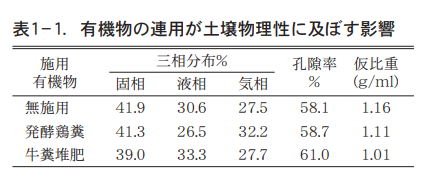
The continuous use of cattle manure improved soil physical properties such as decreasing the solid phase ratio, temporary specific gravity, and increasing the liquid phase ratio, but the continuous use of fermented poultry manure did not improve soil physical properties (Table 1-1).
Regarding soil chemistry, the continuous use of cattle manure increased total carbon and total nitrogen content, CEC, effective phosphate and exchangeable base, and especially the accumulation of exchangeable potash was remarkable. On the other hand, the accumulation of effective phosphoric acid and exchangeable lime was remarkable in the area where fermented chicken manure was used continuously (Table 1-2).
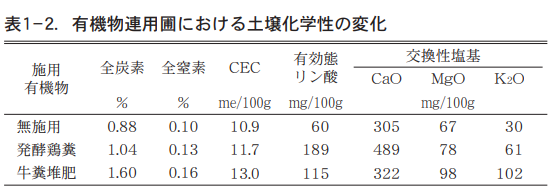
The continuous use of cattle manure improved the soil physical properties of spinach without fertilizer, but too much application resulted in accumulation of various fertilizer components, especially exchangeable potassium. On the other hand, the continuous application of fermented poultry manure had little effect on soil physical properties, but increased the concentration of salts in the soil and disturbed the base balance.
(2) Actual physical and chemical properties of soils in institutional spinach-growing areas
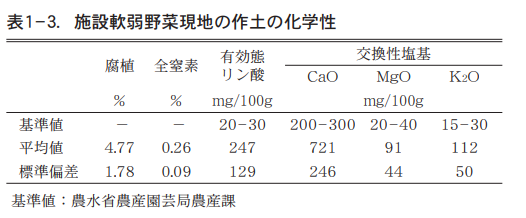
In the institutional spinach production areas in this prefecture, most of the producers applied organic matter, and 801 TP3T of them applied an average of 5 tons per 10a/year of cattle manure. In addition, lime and soluble phosphorus were applied as soil improvement materials, and chemical or organic fertilizers containing the three elements were applied at each planting. As a result, the soil physical properties were improved with high humus content, but effective phosphate and exchangeable base were accumulated, and their values were significantly higher than the standard values set by the Agricultural Production Division of the Agriculture and Horticulture Bureau of the Ministry of Agriculture, Forestry and Fisheries (Table 1-3).
This accumulation was considered to be due to the significantly higher amount of fertilizers (organic matter, soil amendments, and chemical fertilizers) brought into the soil compared to the amount of fertilizers taken out into the soil (nutrient uptake by the crop). It was found that the natural rainfall (600 mm) due to the removal of the greenhouse vinyl during the winter period caused little runoff of fertilizer components other than nitrogen in the soil (Fig. 1-1).
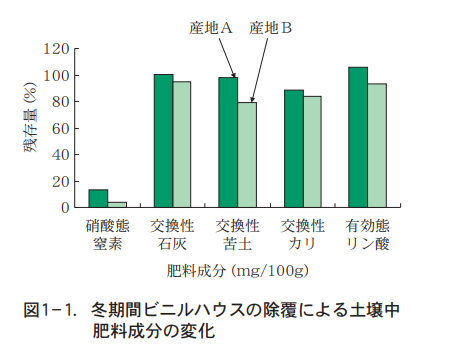
3) Appropriate fertilizer content in soil for spinach
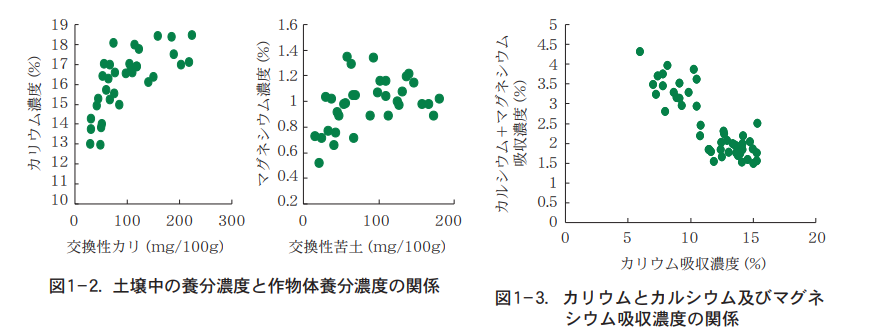
No harm from too much exchangeable base in the soil has been observed to date. Potassium levels in spinach increased up to 70 mg/100 g of exchangeable potassium in the soil, but no increase was observed above that level. The same trend was observed for exchangeable bitter soil at 60 mg/100 g or more, exchangeable lime at 500 mg/100 g, and effective phosphoric acid at 50 mg/100 g or more. Magnesium absorption concentrations decreased at concentrations of 100 mg/100 g or more of exchangeable bitter soil, indicating that high concentrations of magnesium were likely causing damage.
また,カリウム吸収濃度の上昇に伴いカルシウム+マグネシウム吸収濃度が低下することから,作物が吸収するからと行って経済効果があるとは言えない。従って,交換性カリの適正濃度は,70mg/100gよりもさらに低いと言える(図1−2,図1−3)。
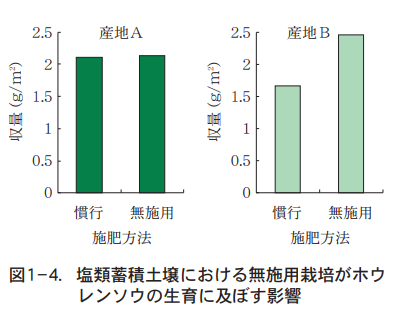
No abnormalities were observed in spinach grown without organic matter, soil amendments, or chemical fertilizers, and the decline in soil component content was slow in areas where all fertilizer components, including nitrogen, exceeded the standard values (Figure 1-4).
Based on the results obtained, soil diagnosis has been conducted since this year to ensure sustainable and stable production. Eight crops were grown without any application of fertilizer except nitrogen in soil that had accumulated fertilizer components due to the application of cattle manure for many years.
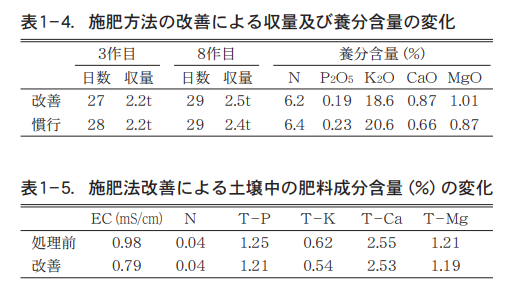
なお,肥料が過剰蓄積した圃場では,その肥料を施用する必要はないが,流亡しやすいチッソを効率よく,しかも簡易な方法で施用する必要がある。
2. compost application with coated urea
Introduction.
In a facility where a large amount of organic matter is applied, fertilizer does not need to be applied because the fertilizer components are not washed away by rainfall of about 600 mm.
However, because nitrogen is absorbed in large amounts and is easily washed away by rainfall, fertilizer is often required for each crop, but excessive application may cause concentration disorders and environmental impact. Therefore, the objective of this study was to select a nitrogen source that shows leaching similar to the nitrogen absorption pattern of spinach, and to reduce the amount of nitrogen applied.
[Test method
Spinach was grown under nitrogen-free and conventional fertilizer systems, and nitrogen absorption (Kjeldahl nitrogen + nitrate nitrogen) was measured at different times of the year. Various nitrogen materials were embedded in the field, and fertilizers suitable for spinach were selected based on the leaching rate at different times of the year. Specialized fertilizers were applied to all layers and locally, and fertilizer nitrogen utilization was calculated by subtracting nitrogen from no nitrogen.
Test Results and Discussion】】 【Test Results and Discussion
Nitrogen absorption by spinach was low for about 2 weeks after sowing, and little effect of fertilizer application was observed, but increased rapidly thereafter (Figure 2-1). Therefore, as a fertilizer for spinach, nitrogen leaching is higher in the second half of the season than in the first half, and a fertilizer effect that almost completes nitrogen leaching during the growing period (approximately 30 days) is appropriate. Among the various nitrogen materials tested, the urea coating of 30-day type (LP30) showed the closest leaching to this condition (Figure 2-2).
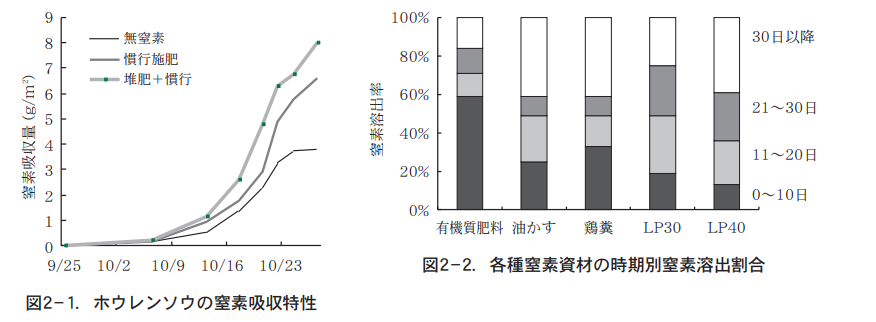
Immediately above the tape containing LP30, the nitrate ion concentration was extremely high, ranging from 450 to 900 ppm, and root elongation was suppressed (Figure 2-3). However, at a distance of 2 cm from the tape, the concentration decreased to about 1/3, and at a distance of 5 cm, the concentration decreased further (Figure 2-4).
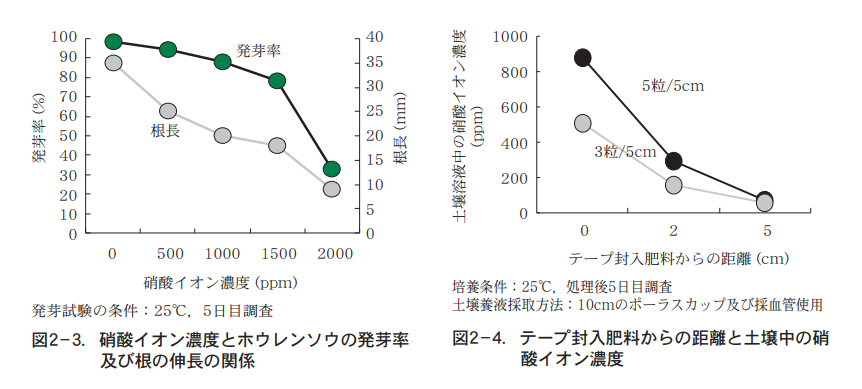
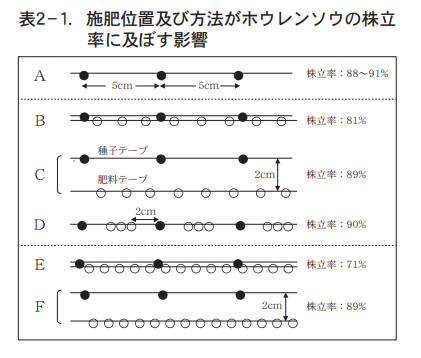
The leached urea changed to nitrate nitrogen quickly with little diffusion, and it was thought that concentration failure could be avoided if LP30 and seeds were separated by about 2 cm. In both cases, the effect of reducing germination defects was observed. However, when the distance between the seeds was set at 5 cm, the maximum number of LP30 seeds that could be enclosed between the seeds was 3 (Table 2-1).
In conventional cultivation, the optimum amount of nitrogen application was 12 kg/10 a when total fertilizer was applied using LP30, while local application using tape-encapsulated fertilizer reduced the nitrogen application rate to 4.5 kg/10 a for spring and fall crops and 2.7 kg/10 a for summer crops, with significantly improved utilization and good growth (Figure 2-5). -5).
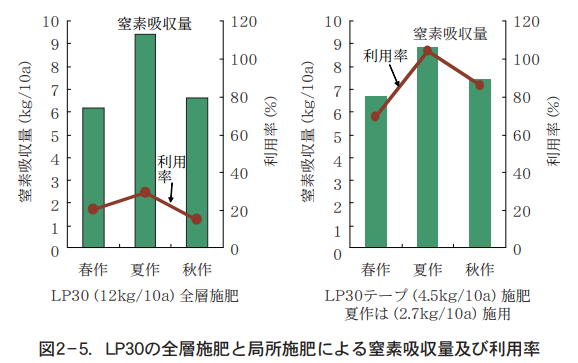
In the above, when fertilizer components other than nitrogen are accumulated in the soil, it is reasonable to use LP30 together as a nitrogen source, and the high utilization rate of nitrogen in such cases makes it effective as a countermeasure against high EC in the soil and also as a countermeasure against groundwater contamination.
The growing period of spinach is approximately 35 days, and LP30 is suitable as a coated urea fertilizer, and one grain should be encapsulated at 5 cm between plants. In this case, as shown in Table 2-1, the seed and fertilizer should be encapsulated in the same tape, or in the case of large amounts of application, in individual tapes.
The cultivation of ginseng
省力化・生産安定化に向けた技術開発
Tohoku Agricultural Research Center, National Agricultural Research Organization
上級研究員 久保 堅司
Introduction.
Ginseng is a perennial crop of the Araliaceae family (Figure 1). The root of this crop has health-promoting effects as a crude drug and is included in many Kampo formulations (73 formulations out of 294 Kampo formulations for general use) (Shibata et al. 2018). In addition, fruits, roots, rhizomes, and leaves are categorized as "ingredient essence (raw material) that is not considered to be a drug unless it claims a pharmaceutical effect," and are used in health foods, drinks, food ingredients such as tempura and tea, ginseng wine (pickled in shochu), and cosmetic materials (Shibata 2021). Most of the ginseng used in Japan is imported from China (total imports in 2020 were 719 tons), and the domestic self-sufficiency rate is only 0.4% (3 tons) (Japan Specialty Agricultural Products Association 2022). With growing interest in health and Kampo medicine, imports have been increasing in recent years (Japan Association of Local Produce 2022), and prices are on the rise (Japan Association of Kampo Herbal Medicine 2015).
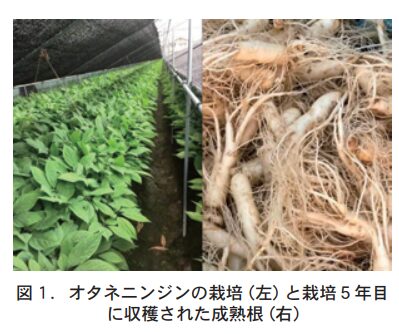
国内では長野県,島根県,福島県が伝統的産地として知られているが,
①原料生薬としての根を収穫するまでに4〜6年という長い年月がかかること,
②長年の経験を頼りに篤農家により栽培されている場面が多いこと,
などが新規参入のハードルとなり,並行して篤農家の高齢化も進んでいることから,昭和55年以降の栽培農家数と面積は3,290戸(昭和55年) ,636ha(昭和61年)をピークに減少が続き,令和2年には121戸,15haとなっている(日本特産農産物協会 2022) 。
Against this background, stabilization and expansion of domestic production of oilseed rape is considered one of the most important issues. Figure 2 shows the cultivation history of the conventional oilseed rape. In this paper, the findings of research and technological development by the author's group on cultivation management in the areas indicated by the dotted line in the figure are described below.
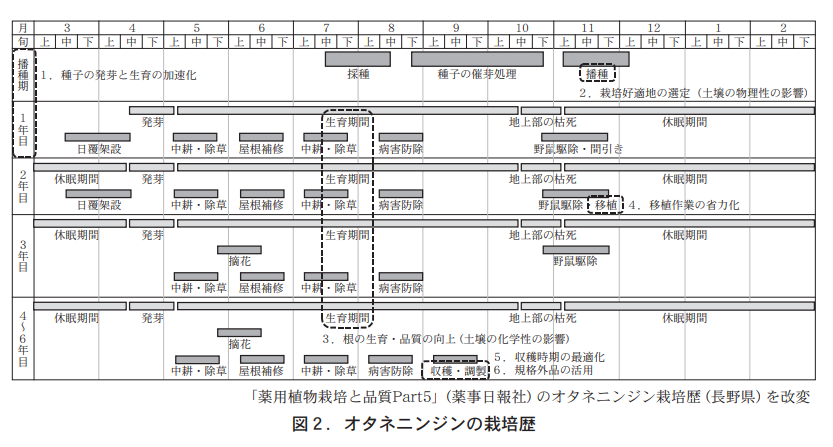
1. accelerated seed germination and growth
Seeds of the oilseed rape have two stages of dormancy, morphological dormancy and physiological dormancy, and germination will not occur unless these two dormancies are broken. Breaking morphological dormancy requires a certain period of exposure to high temperatures in summer, while breaking physiological dormancy requires a certain period of exposure to low temperatures in winter. Therefore, seeds are easily affected by the growth environment, and it takes nearly eight months from seed collection to germination. For these reasons, seed dormancy breaking and seedling growth are considered to be among the most difficult processes throughout the growing season. Therefore, here we examined growth conditions to accelerate seed germination and seedling growth.
その結果,吸水させた種子を100ppmのジベレリンに24時間浸漬し,15℃で10週間処理することにより,芽切り(種子の胚が膨らみ,種皮が割れること)を促せることが明らかになった(図3) 。その後,5℃・12週間の処理により,効率的に発芽させられることが示された。発芽後は,光強度を320μmol m⁻2s⁻1,二酸化炭素濃度を1500ppmまで高めることにより,苗の生長を早められることが明らかになった(Kuronuma et al. 2020) 。
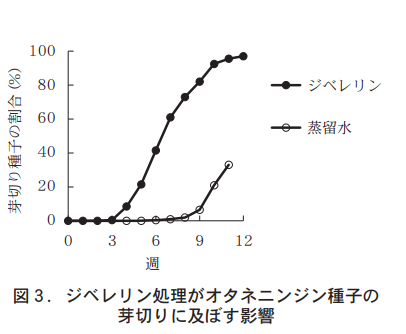
These results suggest that seed dormancy breaking and seedling growth using environmentally controlled facilities can improve and stabilize the germination rate and shorten the growing period compared to the conventional outdoor seed dormancy breaking and seedling growth in open fields.
2. selection of suitable cultivation sites (influence of soil physical properties)
points, suggesting that high soil hardness is one of the factors that inhibit the growth of oilseed rape (Kubo et al. 2017). Subsequently, we expanded the area covered by the study and investigated the growth of oilseed rape and soil hardness in other production areas (Nagano and Shimane prefectures), and found that the main root length and root weight of oilseed rape were greater in Nagano Prefecture, followed by Shimane and Fukushima prefectures in that order (Kubo et al. 2019). The average soil hardness of the 20 cm surface layer in the Nagano and Shimane Prefecture plots was about 130 kPa and 200 kPa, respectively, even at harvest when compaction had progressed, which was lower than the hardness (about 900 kPa) in the first year after cultivation in the Fukushima Prefecture plot (Figure 4).
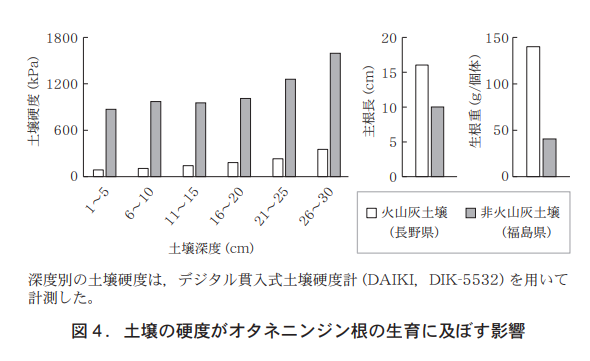
The plots in Fukushima Prefecture were gray lowland soil, whereas those in Nagano and Shimane prefectures were black-box soil, suggesting that soil type is closely related to soil hardness. When a soil improvement material, polyvinyl alcohol (PVA, DENKA Poval B-20), was applied (100 kg/10a) to a field in Fukushima Prefecture, where soil physical properties were poor, and the field was plowed and ridged, hardness around 0-20 cm soil depth was reduced and root elongation was improved (Kubo et al. 2019).The reduction in soil hardness due to PVA application was observed throughout the growing period of oilseed carrot.
These results suggest that fields with soil that does not harden easily, such as black-box soil, are suitable for cultivating oilseed carrots. On the other hand, it is important to improve the physical properties of the soil with organic matter and soil improvement materials such as PVA before planting in a paddy field.
3. improvement of root growth and quality (influence of soil chemistry)
The roots of harvested carrots sometimes lose their value as a commodity due to shape and discoloration such as browning. Although the use of chemical fertilizers has been discouraged in carrot production, and soil preparation using organic matter and green manure for more than one year has been recommended, no case study has been conducted to investigate the relationship between such soil preparation and productivity and quality of carrots. Here, we focused on the behavior of nitrogen in carrot production, and analyzed and discussed its relationship with productivity and quality.
When water-soluble metabolites such as sugars, organic acids, amino acids, and amines contained in the root zone were analyzed and correlated with growth rate by region, the results showed that individuals with high concentrations of amino acids (glutamic acid, glutamine, etc.) had lower root weights in plots from several regions. Excess nitrogen in the soil (which tends to occur when chemical fertilizers are applied) is converted to amino acids and other compounds. The low root weight of the plants suggests that nitrogen may not be efficiently utilized. The accumulation of amino acids may also be a factor in the browning of the root surface (Figure 5).
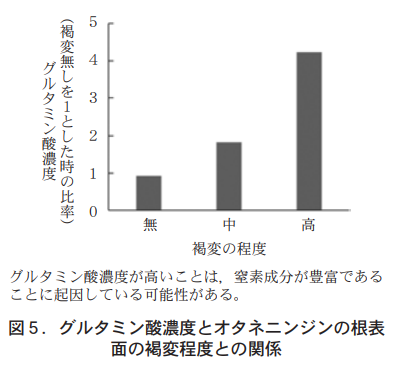
These results suggest that supplying nitrogen at a slow rate commensurate with growth may improve root growth and quality in oilseed carrots.
4. labor-saving transplantation work
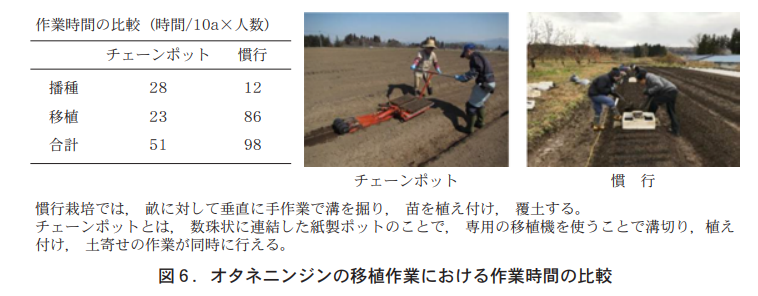
In conventional cultivation, seedlings of carrots are dug up from the nursery field and transplanted to the main field at intervals. This process is done by hand and requires time and labor. Here, we investigated the use of chain pots and a special transplanting machine (chain pot transplanting) to reduce the labor required for transplanting.
A comparison of labor hours between chain pot transplanting and conventional transplanting showed that chain pot transplanting (28 hours/10a x number of people) required more time for seeding than conventional transplanting (12 hours/10a x number of people), but the time required for transplanting was 86 hours/10a x number of people for conventional transplanting, whereas the time required for chain pot transplanting was 23 hours/10a x number of people (Figure 6). However, the time required for transplanting was reduced from 86 hours/10a×number of transplanters in the conventional method to 23 hours/10a×number of transplanters in the chain pot transplant method (Figure 6). The total time required for seeding and transplanting was estimated to be about half of that for conventional cultivation with chainpot transplanting.
5. optimization of harvest time
オタネニンジンは生育が緩慢なため,播種から収穫まで4〜6年の栽培年数が必要とされている(柴田ら 2018) 。ここでは,根の肥大と薬用有用成分の蓄積が経年的にどのように推移しているかを明らかにすることにより,最適な収穫時期を明らかにしようとした。播種後3年目の根(3年根) ,4年根および5年根を一年おきに福島県会津地域の同一圃場から採取し,生根重を比較したところ,4年根は3年根の約3倍に肥大しており,4年根と5年根の間には大きな差異は認められなかった(図7) 。
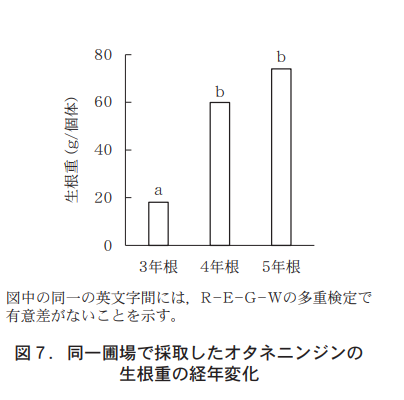
There was no clear difference in the content of medicinal useful component (ginsenoside) between 3- and 5-year-old roots, all of which met the content specifications specified in the Japanese Pharmacopoeia (data omitted). These results suggest that the optimum harvesting period for oilseed carrots in the Aizu region of Fukushima Prefecture is the fourth year after sowing.
6. utilization of substandard products
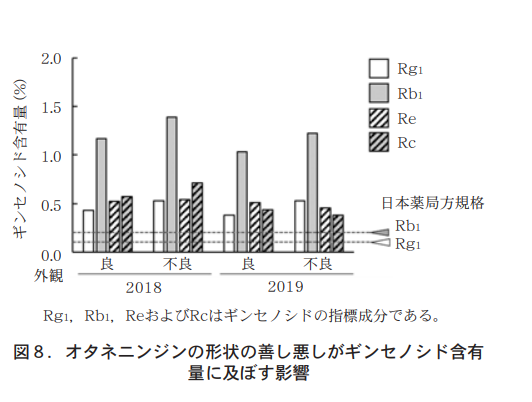
As described in "4. Improvement of Root Growth and Quality (Influence of Soil Chemistry)," there are situations in which harvested ginseng roots lose their value as a commodity due to shape and discoloration such as browning. In this study, we investigated the effect of good or bad shape on this component by examining the ginsenoside content of roots with poor shape (poor growth of the main root, browning on the surface, etc.) from the viewpoint of using the roots, which had a low value as a commodity, for pharmaceuticals and other purposes.
A comparison of the ginsenoside content between the healthy and misshapen roots showed no clear difference, and both were in compliance with the specifications for pharmaceutical ingredients (Fig. 8). This indicates that the root with poor shape, which was conventionally regarded as a low-value product, can be used as a raw material for crude drugs. The results also suggest the possibility of improving the value of the root as a pharmaceutical product by utilizing it, which was previously considered a low value product.
summary
The information presented in this paper is available on the website of the National Institute of Agrobiological Sciences (NIH) as "Guide to cultivation of the medicinal crop Otane-ginseng for labor saving and production stabilization" (NIH et al. 2021a). Please note that these R&D results were obtained mainly from trials and surveys in Fukushima, Nagano, and Shimane prefectures, and may vary depending on regional and climatic conditions. The above guide is intended to provide information on how to improve and save labor with regard to individual management techniques in the cultivation process. Comprehensive information on the cultivation of oilseed rape is compiled in the "Guide to Medicinal Crop Cultivation: Development of Technology to Expand Domestic Production of Medicinal Crops" (National Agricultural Experiment Station et al. 2021b).
一方で,オタネニンジンの国内生産の拡大および安定供給に向けては,伝統的な栽培技術を継承しつつ,本作物の生理・生態の理解をさらに深め,生産を効率化させる必要がある。近年,オタネニンジンが罹病する糸状菌やウイルスについて,同定と対策に関する研究が進展している(UeharaIchiki et al. 2019;佐藤・廣岡 2020) 。また,優良株の維持のための組織培養技術の開発も進められている(関根・鈴木 2020) 。
From another perspective, activities related to raising the name recognition of this crop and promoting its attractiveness are also important efforts to increase consumption. In recent years, in addition to its use as a raw material for crude drugs, various possibilities have been recognized, including its use as a health food ingredient in cooking and processed products, as a material for regional development, and as a tourism resource (Fukushima Prefecture 2021). Continued research and production promotion efforts are needed to ensure the stable production of this crop and to improve the profitability of producers.
thanks
We thank Yoichi Kikuchi (Aizuwakamatsu City, Fukushima Prefecture), Taku Shimizu (Shimizu Yakuso Co., Ltd., Kitakata City, Fukushima Prefecture), Toshihiko Yokoya (Yokoya Farm, Tomi City, Nagano Prefecture), and Takuya Watanabe (Yushien Agri Farm, Inc., Matsue City, Shimane Prefecture) for their kind cooperation in the field survey of production plots. Keiki Okazaki (National Institute of Agrobiological Sciences), Hitoshi Watanabe (Chiba University), Shuichiro Akiba (Fukushima Medical University), and Koji Egawa (Fukushima Agricultural Research Center) contributed equally to the review of this manuscript as did the authors in data acquisition and analysis.
The research and technology development described in this paper was conducted by the Otane Ginseng Team (National Agricultural Research Institute, Chiba University, Fukushima Medical University, and Fukushima Prefectural Agricultural Research Center) as part of the "Development of Technologies for Expanding Domestic Production of Medicinal Crops (Representative: Hiroki Kawashima)" (2016-2020) project research commissioned by the Ministry of Agriculture, Forestry and Fisheries. The project was conducted by the Otane Carrot Team (National Agricultural Research Institute, Chiba University, Fukushima Medical University, and Fukushima Prefectural Agricultural Center).
References
●福島県.2021.おたねにんじんフェア.
●五十嵐裕二.2019.オタネニンジンの新しい「国産化」 .
生物工学.97:236−238.
●久保堅司,江口哲也,小林大輔,秋葉秀一郎,三潴忠道,渡辺均,
岡崎圭毅,松波寿弥,清水琢,星佳織,永山宏一,信濃卓郎.2017.
土壌の物理性がオタネニンジンの生育に及ぼす影響.
第47回根研究集会講演要旨集.14.
●久保堅司,江口哲也,秋葉秀一郎,小林大輔,三潴忠道,渡辺均,
星佳織,野田正浩,五十嵐裕二,岡崎圭毅,永田修,信濃卓郎.2019.
土壌の物理性とオタネニンジン生育との関係と資材施用による物理性改善効果の解析.
第248回日本作物学会講演会要旨集.88.
●Kuronuma, T., Wang, Q., Ando, M. & Watanabe, H. 2020.
Effects of different light intensities on the growth and accumulation
of photosynthetic products in Panax ginseng C. A. Meyers.
Environ. Control Biol. 58: 131-135.
●日本漢方生薬製剤協会.2015.中国産原料生薬の価格調査.
●日本特産農産物協会.2022.
地域特産作物(工芸作物,薬用作物及び和紙原料等)に関する資料(令和2年産) .
●農研機構,千葉大学,福島県立医科大学,福島県.2021a.
省力化・生産安定化に向けた薬用作物オタネニンジンの栽培手引き.
農林水産省委託プロジェクト研究「薬用作物の国内生産拡大に向けた技術の開発」
薬用作物コンソーシアム,オタネニンジンチーム.
●農研機構 他.2021b.
薬用作物栽培の手引き〜薬用作物の国内生産拡大に向けた技術の開発〜.
農林水産省委託プロジェクト研究「薬用作物の国内生産拡大に向けた技術の開発」
薬用作物コンソーシアム.
●岡崎圭毅,久保堅司,秋葉秀一郎,小林大輔,三潴忠道,信濃卓郎,
常田岳志,中島泰弘,田中福代,大脇良成.2020.
オタネニンジンの生育に関連した窒素同位体比および窒素成分の解析.
園芸学研究別冊.19,151.
●佐藤豊三,廣岡裕吏.2020.
最近明らかになった薬用作物の糸状菌病.植物防疫.74:91−96.
●関根綾,鈴木誉子.2020.
おたねにんじん‘かいしゅうさん’培養個体の効率的な順化方法の開発.
園芸学研究別冊.21,132.
●柴田敏郎.2021.
養命薬の代表,朝鮮人参−絶滅危惧種オタネニンジンの栽培化の歴史と利用,そして日本の現状.
FFI JOURNAL.226:333−341.
●Uehara-Ichiki, T., Ohashi, M. & Hanada, K.2019.
Yellowing of Panax ginseng Meyer induced
by cucumber mosaic virus infection.J. Gen. Plant Pathol.85:155−157.
●柴田敏郎,酒井英二,林茂樹,菱田敦之,佐藤豊三.2018.
薬用作物 栽培の手引き (2) .9−58.
薬用作物産地支援協議会.
●山本豊,黄秀文,佐々木博,武田修己,樋口剛央,向田有希,
森祐悟,山口能宏,白鳥誠.2019.
Report on the Survey on the Usage of Crude Crude Drugs in Japan. Journal of Pharmacognosy. 73: 16-35.
No Soil - Part 16
堆肥と化学肥料,その効果を比べる
−共通点とちがいは何か−
Jcam Agri Co.
北海道支店 技術顧問
松中 照夫
From the 11th (May) to the 13th (July) issue of this series, we have discussed compost, and in the 14th (August/September) and 15th (October) issues, we have discussed chemical fertilizers. We have described under what circumstances compost and chemical fertilizers were introduced to the world and what effects they have on crop production. In this month's issue, we will review the past, compare the effects of compost and chemical fertilizers, and summarize the similarities and differences between them. In the following, the term "compost" simply refers to organic materials, including both fully matured and immature compost.
1. effects of diverse composts
すでに第12回で詳しく述べたように,堆肥を農地に与えた場合,大きく分けて3つの効果がある。すなわち,①養分としての効果,②比較的分解されにくい安定した有機物としての効果,③生物の供給源としての効果である。ただし,これらの効果は,あくまでもこうした効果が期待されるということであって,堆肥を土に与えれば必ず自動的に発現するということではない。また,③生物の供給源としての効果は,新規に造成された農地のような栽培履歴がないところで発現する効果であり,栽培歴のある農地ではその効果に大きな期待はできない。
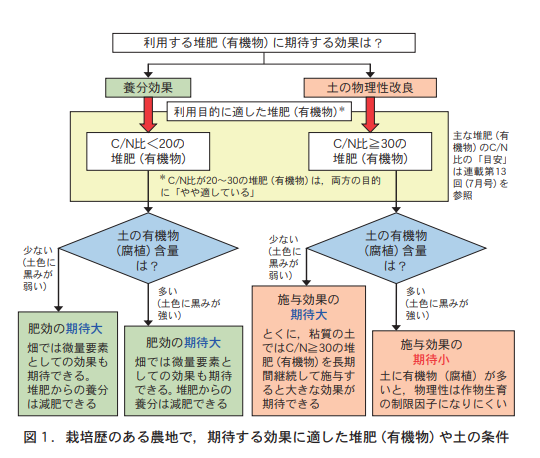
Furthermore, the effects of (1) and (2) may or may not be expected depending on soil conditions (organic matter content). Moreover, there are many kinds of composts. The effects that can be expected from various types of compost depend on the C/N ratio, which is the ratio of carbon (C) and nitrogen (N) contained in the compost.
Therefore, Figure 1 summarizes what kind of compost can be used on what kind of soil for farmland with a history of cultivation.
2. chemical fertilizers only have a nutrient effect
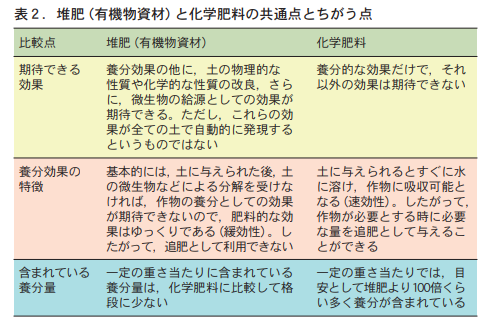
On the other hand, the effects of chemical fertilizers are not as diverse as those of compost. In other words, among the effects of compost, chemical fertilizers can only be expected to be effective as (1) nutrients. Only compost can be expected to improve the physical properties of the soil, such as the size and proportion of gaps in the soil (pore space distribution), ease of drainage (drainage property), water retention (water retention property), air permeability (aeration property), ease of cultivation (tillability), and various other effects as stable organic matter, as we pointed out in the 12th issue (June issue). The effects of compost alone can be expected only from compost.
3. compost and chemical fertilizers differ in the onset of nutrient effects.
The effects of compost and chemical fertilizers differ in their effects as nutrients. As a rule, the nutrients in chemical fertilizers are in an inorganic form that is easily absorbed by crops. Moreover, they are manufactured so that when they are applied to the soil, they dissolve in the soil moisture and are absorbed by the crop. Therefore, the nutrient effect of chemical fertilizers is characterized by rapid action. If a crop shows signs of nutrient deficiency during its growth, the delay in growth can be corrected with additional chemical fertilizers. This is possible because chemical fertilizers are fast-acting.
4. effect of stable organic matter on improving soil physical properties
On the other hand, the nutrients contained in compost are mostly in the organic form, with only a few in the inorganic form readily absorbed by crops. The organic nutrients are decomposed by soil microorganisms before they can be absorbed by the crop. Therefore, compost is a slow-acting nutrient that takes time to become effective. Therefore, it is not suitable for use as a fertilizer.
Of the nutrients contained in compost, the total amount of the fast-acting inorganic portion and the relatively easily degradable (readily degradable) organic portion can be expected to have a fertilizing effect on the soil in the same year they are applied to it. The rest of the organic portion, which takes more time to decompose (persistent), remains in the soil and is carried over to the next year and beyond as stable organic matter.
C/N比が20未満と小さい堆肥は,分解されやすい。そのため養分効果が強く表れる。逆にC/N比が30以上と大きな堆肥は,分解されにくく安定した有機物として土に残る。それが土の物理性改良の効果をもたらす。
5. chemical fertilizers have high nutrient content and are light in weight as materials
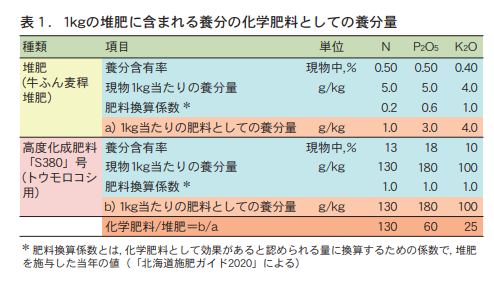
There is another important difference between the nutrients contained in chemical fertilizers and compost. It is the difference in the amount of nutrients contained in a given weight. Chemical fertilizers contain far more nutrients than compost. Therefore, chemical fertilizers provide more nutrients per labor hour and are cheaper to transport per unit of nutrient content. For example, comparing an average compost (cattle manure straw compost) with a chemical fertilizer brand "S380" for corn, the chemical fertilizer provides 130 times more nitrogen (N), 60 times more phosphorus (as P2O5), and 25 times more potassium (as K2O) than the compost when the same 1 kg of each is applied to the soil ( Table 1).
Because compost has a low nutrient content, the amount applied must be large in order to provide the large amount of nutrients needed to increase crop production. However, the amount is too large and labor-intensive. Chemical fertilizers, however, have made it possible to reduce this labor. This is because chemical fertilizers can provide large amounts of nutrients even in small amounts. Therefore, the use of chemical fertilizers has succeeded in greatly increasing the crop yield per area of land. Moreover, it also means an increase in production per labor hour. Thus, the production of food could be increased to support a large population.
The similarities and differences between compost and chemical fertilizers described above can be summarized in Table 2.